
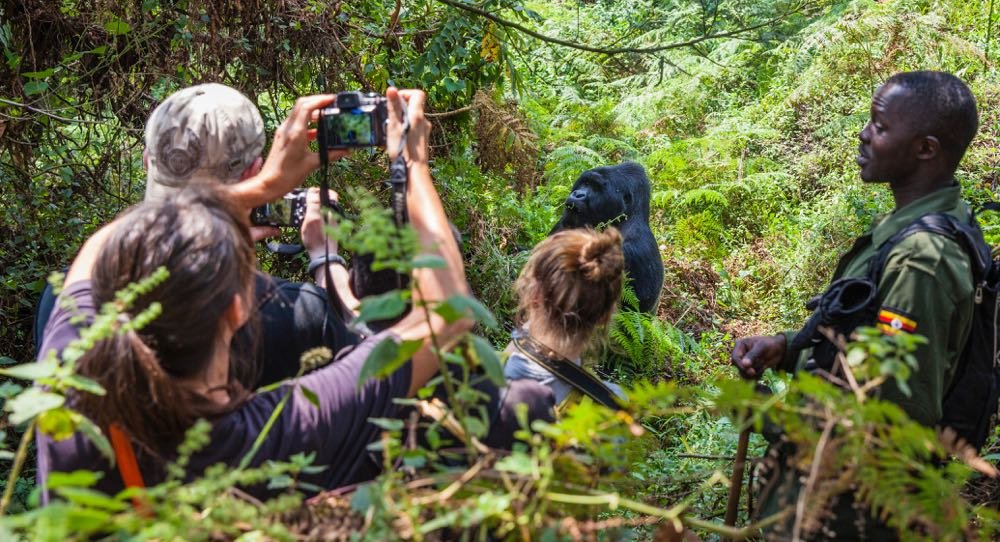
Gorilla Habituation Tour in Uganda. Uganda is widely regarded as one of Africa’s finest wildlife destinations, and for good reason. Among its many extraordinary offerings, the Gorilla Habituation Experience stands in a league of its own. Unlike a standard gorilla trek, this rare activity allows you to spend an entire day alongside a semi-wild gorilla family that is still being trained to accept the presence of humans. It is raw, intimate, and profoundly moving — a once-in-a-lifetime encounter that goes far beyond what most Africa travellers ever get to experience. If you are planning Uganda Safaris and want something truly extraordinary, gorilla habituation is where to start.
What Is the Gorilla Habituation Experience?
The Gorilla Habituation Experience (GHEE) is a special permit activity offered exclusively in Uganda’s Bwindi Impenetrable National Park. It differs significantly from the standard gorilla trek, where visitors spend just one hour with a fully habituated gorilla family. During habituation, guests accompany a team of researchers, trackers, and Uganda Wildlife Authority rangers who work daily with a gorilla group that is still in the process of becoming comfortable with human presence. This process typically takes between two to five years before a gorilla family is considered fully habituated and opened to regular trekking tourism.
The experience gives visitors up to four hours with the gorillas in their natural habitat — four times longer than the standard visit. This extended time means you witness the gorillas feeding, playing, grooming, building day nests, and displaying natural social behaviours rarely seen during a one-hour trek. You are, in effect, a silent observer in the gorillas’ world, watching a living scientific process unfold around you. For anyone who has dreamed of a deeper connection with these magnificent great apes, there is no more rewarding way to achieve it. Learn more about our 18 Days Primate Habituation Experience to see how we combine this activity with other Uganda highlights.
Where Does Gorilla Habituation Take Place?
The Gorilla Habituation Experience is conducted exclusively in the Rushaga sector of Bwindi Impenetrable Forest National Park, located in southwestern Uganda. Bwindi is a UNESCO World Heritage Site and home to roughly half the world’s remaining mountain gorilla population, making it the single most important gorilla conservation area on the planet. The Rushaga sector is particularly rich in gorilla families and offers some of the most dramatic forest landscapes in East Africa — dense jungle, mist-covered ridges, and a remarkable diversity of plant and animal life.
The Bwindi forest is challenging terrain, so a reasonable level of fitness is recommended. Trails can be steep, muddy, and thick with vegetation. However, the reward of spending four uninterrupted hours with a gorilla family deep in one of Africa’s oldest rainforests makes every step worth it. Our experienced guides and well-maintained safari vehicles ensure that getting to and from the park is as comfortable as possible. You can also read about gorilla habituation in Bwindi Forest to understand what researchers and rangers do during each session in the field.
The Gorilla Habituation Permit: Cost and Availability
A Gorilla Habituation Experience permit in Uganda costs USD 1,500 per person, making it more expensive than the standard gorilla trekking permit, which is priced at USD 700. The higher cost reflects the exclusivity of the experience — only four visitors are permitted per gorilla family per day, compared to eight for a standard trek. This small group size creates an exceptionally intimate and undisturbed atmosphere. Permits are issued by the Uganda Wildlife Authority and should be secured well in advance, particularly during peak travel seasons between June and September and December through February.
Because availability is strictly limited, early booking is strongly advised. We recommend planning your habituation experience at least six months ahead and combining it with other activities in Uganda to make the most of your journey. Our team can handle all permit arrangements as part of a Best Gorilla Trekking package designed around your travel dates and preferences. For those looking to balance cost and experience, exploring Affordable Tours for Gorilla Trekking is a great starting point. You can also find useful planning advice on planning a perfect gorilla trip for insight into logistics, timing, and preparation.
What to Expect on the Day
The day begins early, typically with a briefing at the Uganda Wildlife Authority offices at around 7:30 AM. Trackers are sent into the forest at dawn to locate the gorilla family using GPS data from the previous day’s resting site. Once the group is found, you set off on foot into the forest accompanied by rangers, guides, and researchers.
The trek to reach the gorillas can take anywhere from 30 minutes to several hours, depending on how far the family has moved overnight. Once you find them, the four-hour observation window begins. During this time you watch the gorillas at remarkably close range — often within just a few metres — as they go about their morning activities. Silverbacks may beat their chests and make dramatic displays; infants tumble and play; mothers nurse their young. Researchers take notes throughout, quietly recording behaviour patterns that contribute to long-term conservation science.
It is important to follow gorilla trekking rules and keep your voice low, avoid sudden movements, and maintain the recommended distance when the gorillas are settled. Reviewing the gorilla tracking rules and regulations before your visit will help you prepare for responsible wildlife viewing. Pack essentials wisely — our full list of things to pack for gorilla trekking covers everything from clothing to camera gear.
Combining Habituation with Other Uganda Experiences
The Gorilla Habituation Experience pairs beautifully with Uganda’s many other wildlife and cultural activities. A popular option is combining it with a chimpanzee habituation outing — Uganda is one of very few places in the world offering both primate habituation activities. The Chimpanzee Habituation Experience in Kibale Forest gives you an equally immersive encounter with our closest genetic relatives.
You can also extend your trip with a wildlife safari in Queen Elizabeth National Park or Murchison Falls, or include a cultural experience with the Batwa pygmies — the original forest-dwelling people of Bwindi. The 5 Days Gorilla Habituation and Batwa Experience is a compact itinerary that beautifully brings together primate encounters and cultural immersion. For those planning a cross-border adventure, our 8 Days Rwanda Uganda Gorilla Safaris combines habituation in Uganda with standard gorilla trekking in Rwanda’s Volcanoes National Park.
Why Choose Uganda for Gorilla Habituation?
Uganda remains the only country in the world offering the Gorilla Habituation Experience as a tourism product, making it a truly unique destination. While Rwanda and the Democratic Republic of Congo also offer gorilla trekking, neither provides this extended, research-based format. Uganda’s permits are also significantly more affordable than Rwanda’s USD 1,500 standard trekking fee, meaning habituation here offers exceptional value for the depth of experience you receive.
Beyond the gorillas, Uganda rewards curious travellers with incredible biodiversity, warm and welcoming communities, and landscapes that range from equatorial rainforest to open savannah. For an overview of everything this remarkable country has to offer, explore our full range of Uganda Safari packages or read The Ultimate Gorilla Trekking in Africa to understand why Uganda consistently tops the list of primate safari destinations. You can also explore gorilla trekking in Uganda experiences to compare options across different budgets and durations.
Book Your Gorilla Habituation Experience Today
The Gorilla Habituation Experience is not just a safari activity — it is a window into one of the most important conservation stories in the world. Every visit directly contributes to the protection of mountain gorillas, supports local community livelihoods, and funds ongoing research that keeps these gentle giants thriving. If this experience is on your bucket list, do not delay. Permits are scarce, and demand continues to grow year after year.