
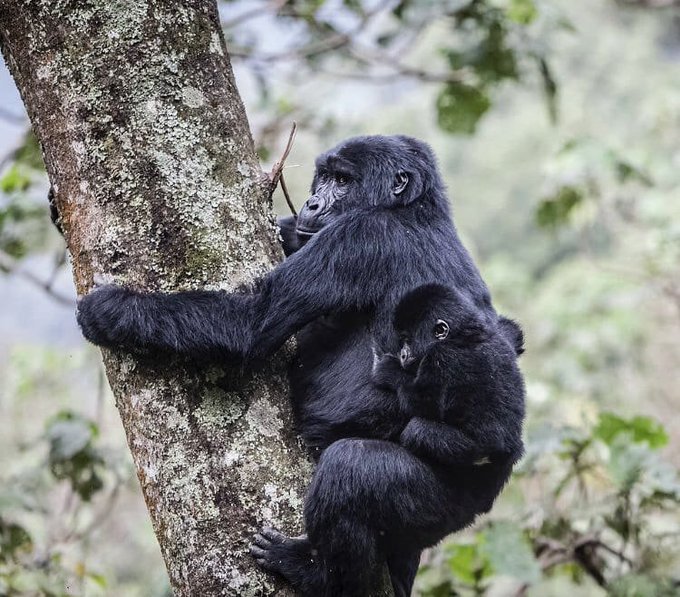
Gorilla Trekking Travel Checklist. Tracking mountain gorillas through the ancient rainforests of East Africa is widely regarded as one of the most extraordinary wildlife encounters on the planet. Whether you are heading into the misty highlands of Bwindi Impenetrable Forest in Uganda or the dramatic slopes of Volcanoes National Park in Rwanda, careful preparation is what separates a comfortable, memorable adventure from an uncomfortable one. Use this comprehensive gorilla trekking travel checklist to make sure you arrive fully ready for every twist of the trail.
Secure Your Gorilla Permit Well in Advance
This is the single most important step in your planning, and it cannot be left to the last minute. Gorilla permits are strictly limited because each gorilla family group receives only eight visitors per day. In Uganda, permits are issued by the Uganda Wildlife Authority, while in Rwanda they are issued by Rwanda Development Board. Demand consistently outpaces supply, especially during the peak dry seasons of June–September and December–February.
If you are considering a Uganda safari that includes Bwindi or Mgahinga, begin the booking process at least three to six months ahead. For a Rwanda safari centred on Volcanoes National Park, the same timeline applies and sometimes longer during the high season. If you want to experience gorillas in both countries on a single trip, explore the double gorilla trekking in Rwanda and Uganda option, which lets you encounter two habituated groups across two different landscapes.
Pack the Right Clothing and Gear
The terrain on a gorilla trek ranges from muddy valley floors to steep, root-tangled slopes at elevations above 2,000 metres. Your clothing choices directly impact your comfort and safety throughout the hike.
- Waterproof hiking boots with ankle support are essential. Trails become slippery after rain, which can fall at any time of year in tropical montane forests.
- Long-sleeved shirts and long trousers protect against nettles, scratching vegetation, and insects.
- A lightweight, waterproof jacket or poncho fits easily into a daypack and is non-negotiable even in the dry season.
- Gardening gloves or lightweight work gloves help when gripping branches and pushing through dense undergrowth.
- Gaiters keep soil and debris out of your boots on particularly muddy sections.
- A sun hat or cap is useful during approach drives and breaks in forest clearings.
Avoid wearing blue clothing, as blue is known to attract tsetse flies in some East African habitats.
Pack Your Daypack Carefully
You will carry your own daypack during the trek, so keep it light while covering all essentials.
- At least two litres of water or a hydration bladder
- High-energy snacks such as nuts, energy bars, and dried fruit for sustained stamina on longer treks
- Sunscreen and insect repellent (DEET-based is most effective)
- A small first-aid kit with blister plasters, antiseptic wipes, and any personal medications
- Your gorilla permit and passport or a certified copy
- Rain cover for your pack
- Camera with a fully charged battery — no flash photography is permitted around gorillas, so set your camera to a high ISO before you enter the forest
Understand the Health and Medical Requirements
Yellow fever vaccination is required for entry into Uganda and recommended for Rwanda. Carry your yellow fever certificate as border and airport officials check it routinely. Other strongly recommended vaccinations include typhoid, hepatitis A and B, and routine immunisations such as measles-mumps-rubella and tetanus.
Malaria prophylaxis is advisable even though gorilla trekking areas sit at altitudes where malaria risk is lower than in lowland regions. Consult a travel health clinic or GP at least four to six weeks before departure to get appropriate medication and advice personalised to your itinerary. Travellers with active colds, flu, or any respiratory illness must inform their guide on the day, as gorillas share roughly 98% of human DNA and are highly susceptible to human diseases. In some cases, your trek may need to be rescheduled — always disclose symptoms honestly.
Sort Your Travel Documents and Insurance
Ensure your passport has at least six months’ validity beyond your return date. Ugandan visas are available on arrival or through the e-visa portal. Rwanda offers visa-free entry to a growing number of nationalities, and the East Africa Tourist Visa covers Uganda, Rwanda, and Kenya on a single permit — excellent value for multi-country travellers.
Travel insurance with comprehensive medical evacuation cover is not optional on a gorilla trek. Medical facilities in remote trekking areas are limited, and evacuation to Kampala or Kigali can be expensive without cover. Make sure your policy explicitly covers adventure activities and trekking at altitude.
Choose the Right Safari Package for Your Goals
Your broader safari itinerary shapes how rewarding your gorilla encounter feels. If you want maximum time with primates, the 18-day Primate Habituation Experience offered in Bwindi allows you to spend up to four hours with a semi-habituated gorilla family rather than the standard one hour — a deeply immersive option for wildlife enthusiasts. For a classic combined experience across both countries, the 8-day Rwanda Uganda Gorilla Safari pairs gorilla trekking with wildlife drives and cultural encounters in a balanced, well-paced itinerary.
Shorter itineraries such as the 3-day Rwanda Uganda Gorilla Safari work well if time is limited, while travellers wanting a fuller East African adventure might consider the 7-day Gateway Gorilla tour. For those curious about what gorilla trekking looks like across different African destinations, reviewing the best places to see gorillas in Africa is a useful research step before committing to a destination.
Prepare Physically for the Hike
A gorilla trek is not a casual nature walk. Depending on where your assigned gorilla family has settled that morning, you could be hiking for two to eight hours across challenging terrain. Treks in Bwindi are widely considered more strenuous than those in Volcanoes National Park due to the dense forest and steep gradients. Begin building your fitness at least six to eight weeks before departure with regular cardiovascular exercise — hiking with a loaded backpack on uneven ground is the best preparation.
Portable altitude sickness medication such as Diamox may be worth discussing with your doctor if you are particularly sensitive to elevation, though most trekking elevations in Bwindi (around 2,400 metres) do not cause problems for the average healthy traveller.
Arrange Your Finances and Tipping Budget
Cash is king in the communities surrounding gorilla trekking areas. ATMs are unreliable or absent near Bwindi and Mgahinga, so withdraw sufficient Ugandan shillings or US dollars before leaving Kampala or Kigali. Credit cards are accepted at most lodges but rarely at local markets or roadside stops.
Tipping is customary and appreciated. Budget approximately $15–$30 for your lead guide, $10–$15 each for porters, and $5–$10 for trackers. Hiring a porter is strongly recommended — they carry your pack, help you navigate steep sections, and support local employment directly.
Plan Your Surrounding Experiences
A gorilla trek is the centrepiece of most East African itineraries, but the surrounding region offers extraordinary complementary experiences. The Congo Gorilla Safari to Virunga National Park adds lowland gorillas and the famous Mount Nyiragongo volcano to your adventure. For primate enthusiasts, the chimpanzee habituation experience in Kibale Forest is a natural pairing with gorilla trekking in Uganda. Birders will find extraordinary diversity along every trail, while hikers can explore the mountain hiking options in Uganda including the Rwenzori range.
For up-to-date park news, travel tips, and destination guides, browse the Saso Gorilla Safaris travel blog or read the African safari with gorillas guide for broader context on combining gorilla encounters with classic African wildlife experiences.
Final Checks Before Departure
In the days before you fly, run through this quick final checklist:
- Confirm your gorilla permit booking reference with your tour operator
- Charge all camera and phone batteries; pack spare memory cards
- Download offline maps for your destination areas
- Share your full itinerary with a trusted contact at home
- Reconfirm your lodge bookings and any domestic transfers
- Check weather forecasts and pack accordingly
When you are ready to take the next step, enquire with Saso Gorilla Safaris to build a tailor-made itinerary that fits your schedule, budget, and travel style. With the right preparation in place, your gorilla trekking experience will be every bit as breathtaking as you have imagined.