
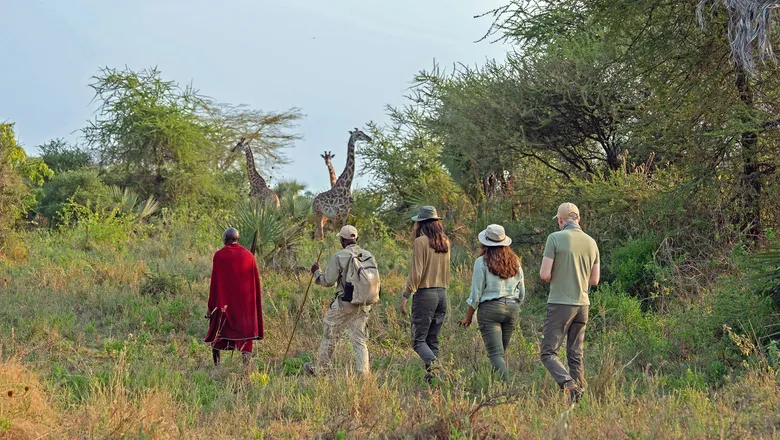
How Safaris Connect Travelers With Nature. There is a kind of silence that only the wild can offer — the hush of tall rainforest trees, the distant rumble of a silverback gorilla, the early-morning birdsong drifting across a golden savannah. For millions of travelers every year, a safari is not simply a holiday. It is a profound reconnection with the natural world, a reminder of what the earth looks like when human noise falls away and life unfolds on its own terms. East Africa, and Uganda and Rwanda in particular, sit at the very heart of this experience, offering some of the most extraordinary wildlife encounters on the planet.
Why Safaris Are More Than Just Wildlife Viewing
Modern travel has given us endless ways to entertain ourselves — curated playlists, filtered feeds, city breaks packed with restaurants and galleries. Yet something keeps drawing people back to open landscapes and unscripted encounters. A safari strips the artificial away. You are no longer a passive consumer of content; you are a witness to life in its most honest form.
When you sit quietly at the edge of a water hole and watch elephants drink at dusk, or when a family of mountain gorillas moves through the undergrowth just a few meters ahead of you, time slows down in a way that no screen can replicate. Studies in environmental psychology consistently show that time spent in nature reduces stress hormones, sharpens attention, and restores emotional resilience. A safari delivers all of this and layers it with awe — the rarest emotional experience of all.
Beyond the personal, safaris create a meaningful bridge between travelers and conservation. Tourism revenue directly funds anti-poaching efforts, ranger salaries, and community development programs that make wildlife protection economically sustainable. When you book a Uganda safari, you are not just choosing an adventure — you are voting with your wallet for the survival of wild places.
Gorilla Trekking: The Ultimate Encounter With Our Closest Relatives
Of all the wildlife experiences East Africa has to offer, gorilla trekking stands in a category entirely its own. To spend one permitted hour with a habituated family of mountain gorillas in their natural habitat is to look into a mirror held up by evolution. The intelligence in their eyes, the tenderness with which mothers hold their infants, the authority radiating from a silverback — these are not things you read about and fully grasp. They are things you must see.
Uganda’s Bwindi Impenetrable National Park is home to nearly half of the world’s remaining mountain gorillas, making it one of the most important conservation areas on earth. The trek itself — through ancient, mist-cloaked forest — is part of the magic. Every muddy trail, every tangled root, every burst of birdsong overhead builds anticipation until the forest guide raises a hand and the gorillas appear.
Rwanda’s Volcanoes National Park offers a complementary experience in the dramatic Virunga mountains, where the landscape shifts from terraced farmland to dense bamboo forest to volcanic peaks. For travelers weighing their options, a Rwanda vs Uganda gorilla trekking comparison can help clarify which destination best suits your travel style and budget. For those considering Mgahinga Gorilla National Park in southwestern Uganda, the added bonus of golden monkey tracking makes for an unforgettable multi-species experience.
Chimpanzee Tracking and Primate Diversity
Uganda is often called the “Primate Capital of the World,” and for good reason. The country hosts 13 primate species, including chimpanzees, red-tailed monkeys, olive baboons, black-and-white colobus, and more. Chimpanzee tracking tours through Kibale National Park or Budongo Forest offer an entirely different but equally captivating experience. Chimpanzees are far more vocal and acrobatic than gorillas, swinging through the canopy and calling to one another across vast stretches of forest.
What makes primate safaris particularly resonant is the undeniable sense of kinship. Watching a chimpanzee use a stick to extract termites from a mound, or seeing a gorilla infant tumble playfully over its older sibling, makes human behavior feel less uniquely clever and more part of a broader continuum of animal intelligence. Safaris, at their best, cultivate humility — and there is nothing more humbling than recognizing yourself in another species.
Big Five Wildlife and the Open Savannah Experience
While primates capture the imagination of many visitors to East Africa, the savannah safari remains an iconic experience for good reason. Uganda’s Queen Elizabeth National Park is one of the continent’s most biodiverse parks, where tree-climbing lions laze in fig trees, hippos crowd the Kazinga Channel, and huge herds of buffalo roll across open plains. A boat cruise at sunset, with elephants silhouetted against a burning sky, is the kind of scene that stays with a traveler for a lifetime.
For those looking to extend their East African journey, Tanzania safari packages bring the added drama of the Serengeti and Ngorongoro Crater — landscapes so vast and wildlife-rich that they feel almost cinematic. And Kenya safari packages centered around the Maasai Mara offer the spectacle of the Great Migration, one of the most extraordinary natural events on the planet.
The beauty of planning with an experienced operator is that these destinations can be combined into a single, seamlessly crafted journey — primates in Uganda, gorillas in Rwanda, plains game in Tanzania, all woven together into one unforgettable African chapter.
Planning Your Safari: Timing, Permits, and Practicalities
The best time to visit Uganda for gorilla safaris is generally during the dry seasons of June to September and December to February, when forest trails are drier and gorilla families tend to stay at lower, more accessible elevations. Rwanda’s gorilla trekking season follows similar patterns, with the dry months offering cleaner skies and easier hiking. Read more about the best time for gorilla trekking in Rwanda to plan your ideal travel window.
Gorilla permits are strictly limited to protect the animals from over-tourism, which means early booking is essential. Uganda permits are currently priced at $800 per person, while Rwanda’s permits sit at $1,500 — both representing investment in one of the world’s most vital conservation ecosystems. Detailed guidance on the cost of gorilla trekking permits in Uganda and gorilla trekking permit prices in Rwanda can help you budget accurately and avoid surprises.
For first-time trekkers, how to prepare for gorilla trekking is essential reading — covering fitness preparation, what to pack, altitude considerations, and the etiquette that ensures both your safety and the welfare of the gorillas.
The Safari as a Way of Seeing
Ultimately, what a safari offers is a new way of seeing — both the world and yourself. Away from the constant demands of modern life, surrounded by landscapes that have existed for millennia, it becomes easier to locate a sense of proportion and gratitude. You realize how small your worries are against the backdrop of a mountain, and how large your responsibility is toward the living systems that sustain all of us.
Whether you choose a luxury gorilla trekking safari in Uganda, a more accessible budget gorilla trekking tour in Rwanda, or a combined Uganda and Rwanda safari, the experience will reshape how you think about nature, conservation, and your place in the web of life.