
Why Bwindi Is a UNESCO World Heritage Site. Deep in the misty highlands of southwestern Uganda, where ancient trees twist toward a perpetually cloud-covered sky, lies one of the most extraordinary places on Earth. Bwindi Impenetrable Forest is not just a national park — it is a living testament to millions of years of ecological evolution, a refuge for some of the world’s most endangered wildlife, and a landscape so rare and irreplaceable that UNESCO inscribed it as a World Heritage Site in 1994. If you have ever wondered what makes Bwindi so special, read on. The answer is far richer than you might expect.
What Is UNESCO World Heritage Status and Why Does It Matter?
The UNESCO World Heritage designation is awarded to places considered to have outstanding universal value — natural or cultural significance so exceptional that their conservation is of benefit to all of humanity. Bwindi Impenetrable Forest National Park earned this title not for one reason, but for a compelling combination of biological diversity, ecological integrity, and its irreplaceable role as a sanctuary for critically endangered species.
For travelers planning a Uganda gorilla safari, understanding Bwindi’s UNESCO status adds a profound layer of meaning to the experience. You are not simply visiting a national park — you are setting foot inside one of the most protected and scientifically significant ecosystems on the planet.
An Ancient Forest With an Ancient History
Bwindi is believed to be one of Africa’s oldest rainforests, with an estimated age of over 25,000 years. It survived the last Ice Age, a period during which most of Central Africa’s forests disappeared. This extraordinary continuity of existence allowed Bwindi to evolve an unparalleled density of life. Covering approximately 321 square kilometres of rugged, montane terrain across altitudes ranging from 1,160 to 2,607 metres above sea level, the forest is among the most biologically complex ecosystems anywhere on the African continent.
This ancient lineage is one of the core reasons UNESCO recognised Bwindi as a site of outstanding universal value. The forest has acted for millennia as a biological ark — preserving species, genetic lineages, and ecological relationships that simply do not exist anywhere else.
Home to Nearly Half the World’s Mountain Gorillas
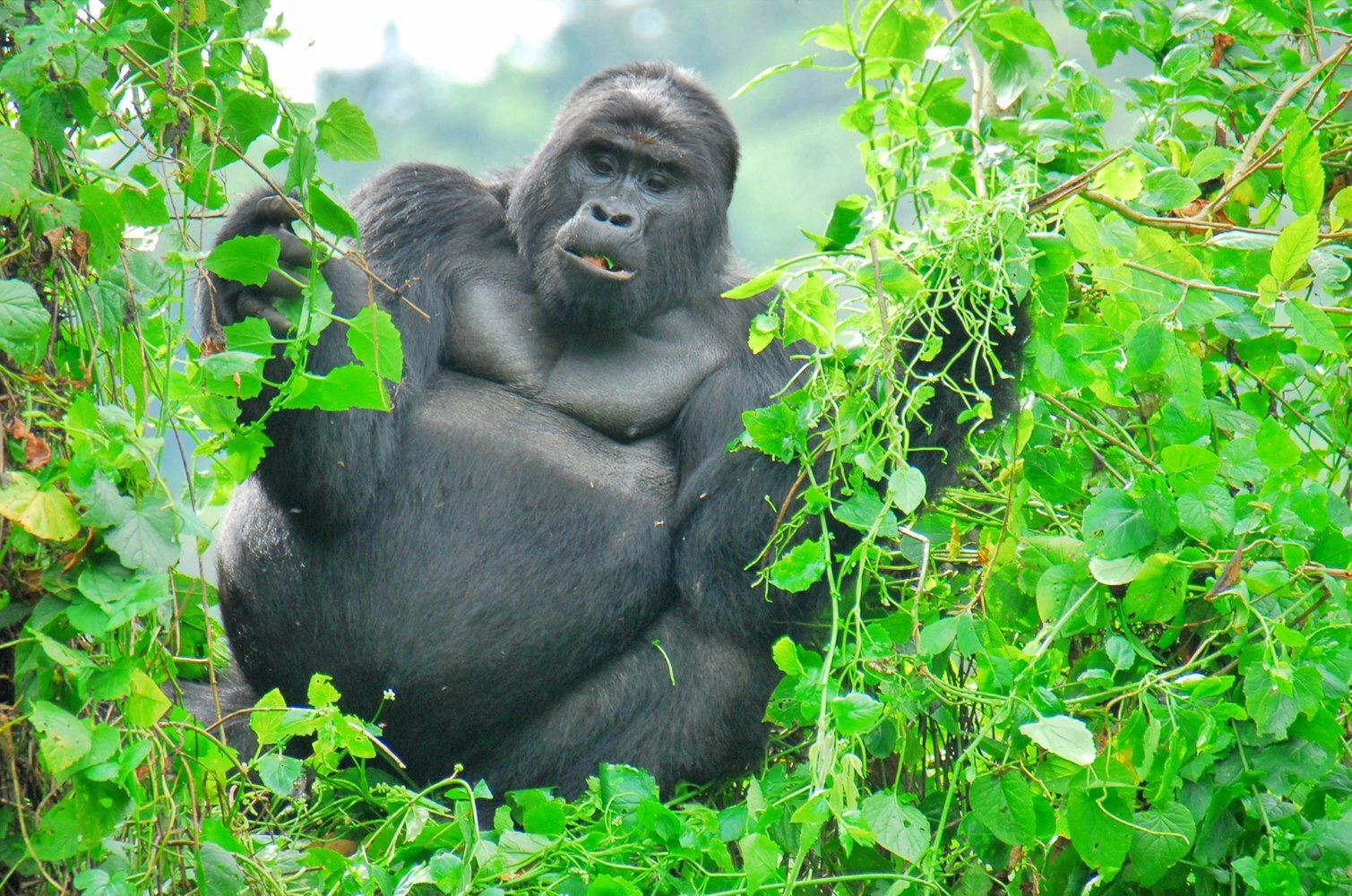
Perhaps the most celebrated reason for Bwindi’s global fame is the presence of mountain gorillas (Gorilla beringei beringei), one of the most endangered primates on Earth. Bwindi shelters approximately half of the entire world’s remaining mountain gorilla population — a staggering responsibility for any ecosystem to hold.
Gorilla trekking in Bwindi is widely considered one of the most profound wildlife encounters available anywhere in the world. The park is divided into four trekking sectors — Buhoma, Ruhija, Rushaga, and Nkuringo — each offering access to different habituated gorilla families across varying terrain. Whether you are a first-time visitor or a returning wildlife enthusiast, the sight of a mountain gorilla family going about its daily life in the wild is a moment that stays with you forever.
For those interested in combining an immersive forest experience with a broader Uganda wildlife itinerary, Saso Gorilla Trips offers expertly tailored safari packages designed around responsible, conservation-focused trekking experiences.
A Biodiversity Hotspot Like No Other
Beyond its gorillas, Bwindi is a biodiversity hotspot of truly staggering proportions. The forest is home to over 120 species of mammals, more than 350 bird species — including 23 Albertine Rift endemics — over 310 species of butterflies, and more than 1,000 plant species including 104 fern species and 163 tree species.
For birders, Bwindi is nothing short of paradise. Rare and endemic species such as the African green broadbill, Shelley’s crimsonwing, and the Grauer’s rush warbler attract ornithologists from across the globe. This extraordinary density of endemic and rare species was a key factor in UNESCO’s decision to include Bwindi on its World Heritage List.
Those interested in exploring the full depth of Uganda’s wildlife landscape may also want to consider combining Bwindi with other Uganda safari destinations, adding destinations such as Queen Elizabeth National Park or Kibale Forest to their itinerary.
The Bwindi Ecosystem: A Critical Carbon Sink
Bwindi is not just biologically rich — it is also ecologically essential. As a mature, intact montane rainforest, it serves as a significant carbon sink, absorbing and storing carbon dioxide from the atmosphere. Its canopy and root systems regulate water cycles across the region, feeding streams and rivers that communities depend on. Its preservation, therefore, is not just a matter of wildlife conservation — it directly underpins the livelihoods and climate resilience of millions of people in Uganda and beyond.
UNESCO’s World Heritage mandate specifically calls for the protection of ecosystems that provide these kinds of broad ecological services to humanity. Bwindi delivers on every count, making its designation not just prestigious but genuinely vital.
Conservation Challenges and Community Involvement
Bwindi’s UNESCO status has also helped mobilise international support for the complex conservation challenges the forest faces. Historically, communities living on the edges of Bwindi — most notably the indigenous Batwa people — experienced displacement when the area was gazetted as a national park. Today, conservation efforts have evolved to include community engagement programs, revenue sharing from tourism, and cultural experiences that celebrate Batwa heritage rather than erase it.
Responsible gorilla tourism has become one of the most powerful tools for protecting Bwindi. Each gorilla trekking permit in Uganda contributes directly to park management and local community development. When you trek in Bwindi, you are not simply a tourist — you are an active participant in a conservation economy that funds anti-poaching operations, habitat restoration, and community welfare programs.
For those who want to experience this incredible ecosystem and understand the depth of its gorilla trekking experience before visiting, Saso Gorilla Trips’ comprehensive Bwindi guide provides detailed insights into what to expect on the trail.
Planning Your Visit to This World Heritage Treasure
Bwindi is accessible year-round, though the best time to visit Uganda for gorilla trekking is generally during the drier months of June to September and December to February, when forest trails are firmer and treks tend to be more manageable. That said, the forest’s mist-shrouded beauty during the rainy season has its own extraordinary appeal.
Permits are issued in limited daily numbers to protect gorilla families from disturbance, meaning availability is precious and advance booking is essential. For travellers coming from Kigali, a day trip to Bwindi from Rwanda is also possible, making it a remarkably accessible experience even for those with limited time.
Whether you choose a luxury gorilla trekking experience in Uganda or a well-priced budget package, every visit to Bwindi carries the same fundamental reward: an encounter with wildness so ancient and so alive, it permanently changes the way you see the natural world.
Final Thoughts: A Place Worth Protecting
Bwindi Impenetrable Forest earned its UNESCO World Heritage status for the same reason it earns the awe of every visitor who enters its shadow — it is irreplaceable. Its age, its biodiversity, its mountain gorillas, its cultural significance, and its ecological importance combine to create a place that simply cannot be replicated anywhere else on Earth.
When you choose to visit Bwindi, you choose to be part of its story — a story of survival, conservation, and the enduring power of wild places. Start planning your journey today with our team at Saso Gorilla Safaris, and let Bwindi’s ancient forest leave its mark on you.