
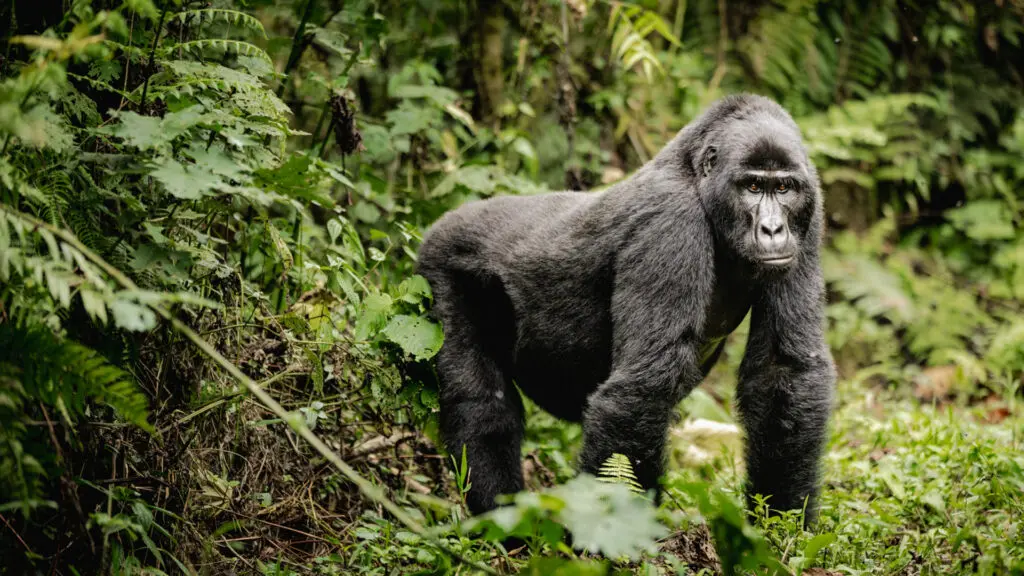
Filming gorillas in the wild is one of the most powerful and emotional wildlife storytelling experiences you can ever capture. Mountain gorillas, found in Uganda, Rwanda, and Congo, live in dense tropical rainforests where light is limited, movement is unpredictable, and filming conditions can be challenging. However, with the right preparation and techniques, you can record breathtaking wildlife footage that tells a compelling story of these endangered primates.
At All Budget Safaris, we guide travelers, filmmakers, and wildlife enthusiasts on how to safely and responsibly film gorillas during trekking adventures while respecting conservation rules and animal welfare.
Understand the Challenges of Filming Gorillas
Before entering the forest, it is important to understand the realities of gorilla videography.
Mountain gorillas live in thick rainforests where lighting is often low due to dense vegetation. The environment is humid, misty, and constantly changing, which affects camera performance and stability.
Gorillas are also highly active and move unpredictably through the forest. You may need to adjust your position quickly to follow them, especially when juveniles are playing or silverbacks are moving the group.
In addition, visitors are only allowed one hour with the gorillas after locating them. This means filmmakers must be efficient, prepared, and ready before the encounter begins.
Use the Right Video Equipment
Choosing the right equipment is crucial for capturing high-quality gorilla footage.
A camera with strong low-light video performance is highly recommended. Mirrorless cameras and professional DSLR cameras work best in forest conditions because they handle ISO and exposure well.
A zoom lens such as 24–70mm or 70–200mm is ideal for balancing close-up shots and wider environmental scenes.
For more advanced filmmakers, a lightweight stabilizer or gimbal can help produce smooth footage while moving through the forest.
However, due to trekking conditions, it is important to avoid carrying overly heavy equipment.
Avoid Flash and Artificial Lighting
Flash and artificial lighting are strictly prohibited during gorilla trekking.
Bright lights can disturb gorillas, especially infants and younger members of the group. It may also alter natural behavior and cause stress to the animals.
Instead, rely on natural light and adjust your camera settings such as ISO, aperture, and shutter speed to compensate for low-light conditions.
Modern cameras are capable of producing excellent video quality even in dim forest environments when used correctly.
Master Stable Handheld Filming
Since gorilla trekking involves hiking through uneven and steep terrain, carrying tripods or heavy rigs is often impractical.
Most filmmakers rely on handheld shooting techniques.
To improve stability:
- Keep elbows close to your body
- Move slowly and smoothly
- Use natural body support like trees or rocks when filming
- Enable in-camera stabilization if available
Practicing handheld filming before your safari can greatly improve your final footage quality.
Focus on Storytelling, Not Just Shots
Great gorilla filming is not just about capturing random clips—it is about telling a story.
Try to document different behaviors such as feeding, grooming, playing, resting, and social interactions. These moments help create a natural narrative of gorilla life in the forest.
Start with wide establishing shots of the forest, then move to medium shots of group behavior, and finally close-up emotional moments such as eye contact or infant interaction.
This storytelling structure makes your footage more engaging and professional.
Capture Gorilla Behaviour Naturally
The most powerful gorilla footage comes from natural behavior.
Gorillas often spend time feeding quietly, grooming each other, or resting. Juveniles provide playful and energetic moments, while silverbacks offer calm, powerful presence.
Avoid forcing movement or positioning yourself in ways that disturb the gorillas. Instead, observe patiently and let natural behavior unfold in front of your camera.
Respectful filming results in more authentic and meaningful wildlife content.
Use Proper Camera Settings for Video
Correct camera settings are essential for high-quality gorilla footage.
A frame rate of 24fps or 30fps is ideal for cinematic wildlife video. A faster shutter speed helps reduce motion blur, especially when filming active juveniles.
Use a wide aperture (such as f/2.8–f/5.6) to allow more light into the camera and create depth of field.
Increase ISO carefully in darker conditions, but avoid going too high to prevent excessive noise in your footage.
Practicing these settings before the trek will help you react quickly during the limited filming time.
Prioritize Natural Light
Lighting is one of the biggest challenges in gorilla videography.
Forest environments often have uneven lighting, with bright patches and deep shadows. Learning how to work with natural light is essential.
Film when gorillas move into open areas where light filters through the trees. Misty conditions can also create dramatic cinematic effects.
Avoid overexposing bright areas while preserving detail in shadows for balanced footage.
Keep Your Movements Slow and Controlled
Sudden movements can disturb gorillas and negatively affect your filming quality.
Move slowly and deliberately when adjusting your position or camera angle.
Avoid running, quick zooming, or abrupt shifts in framing.
Gentle and controlled movement not only respects the gorillas but also produces smoother and more professional-looking footage.
Capture Emotional Close-Ups
One of the most powerful aspects of gorilla filming is capturing emotion.
Focus on the eyes, facial expressions, and interactions between family members. These close-up shots create strong emotional connections with viewers.
Moments between mothers and infants or silverback leadership behavior are especially powerful storytelling opportunities.
These emotional clips often become the highlight of any wildlife documentary.
Include Environmental Shots
Do not only focus on gorillas—include the surrounding forest environment as well.
Wide shots of misty mountains, dense vegetation, vines, and bamboo forests help set the scene and show the gorillas’ natural habitat.
Environmental footage adds depth to your story and helps viewers understand the ecosystem where gorillas live.
Combining close-ups and wide shots creates a balanced and visually rich documentary.
Work with Natural Sound
Sound is a powerful part of gorilla filmmaking.
Instead of relying on artificial audio, capture natural forest sounds such as rustling leaves, bird calls, and gorilla vocalizations.
These sounds enhance storytelling and create an immersive viewing experience.
If possible, use a small external microphone for clearer ambient audio.
Hire a Porter for Filming Support
Hiring a porter during gorilla trekking can greatly improve your filming experience.
Porters help carry camera gear, water, and backpacks, allowing you to focus fully on filming.
They also assist on steep or slippery terrain, making movement easier and safer.
With reduced physical strain, you can concentrate more on capturing high-quality footage.
Porters also support local communities living near national parks.
Respect Gorilla Trekking Rules at All Times
Filming must always follow strict conservation guidelines.
Maintain a minimum distance of about seven meters from the gorillas at all times. Never attempt to get closer for a better shot.
Avoid blocking their movement or disturbing natural behavior.
Follow all instructions given by ranger guides to ensure both your safety and the welfare of the gorillas.
Responsible filming is essential for sustainable wildlife tourism.
Be Ready Within the Limited One Hour
Once gorillas are found, visitors are allowed only one hour with them.
This means you must be fully prepared before entering the forest. Ensure your camera is charged, settings are ready, and memory cards have enough space.
Avoid wasting time adjusting equipment during the encounter.
Being organized allows you to maximize every moment with the gorillas.
Best Time for Filming Gorillas
The dry seasons from June to September and December to February are generally the best for filming gorillas.
During these months, trekking conditions are easier and lighting is often more stable.
However, rainy seasons offer unique cinematic opportunities such as mist, rain effects, and lush green scenery.
Each season provides different visual storytelling advantages.
Ethical Gorilla Filming Matters
Ethical filmmaking is extremely important in gorilla trekking.
The well-being of the gorillas should always come first, even before capturing the perfect shot.
Avoid disturbing their natural behavior or attempting risky filming angles.
Respectful filming helps protect endangered gorillas and promotes global awareness of conservation efforts.
By sharing responsible wildlife videos, you contribute to the long-term protection of mountain gorillas.