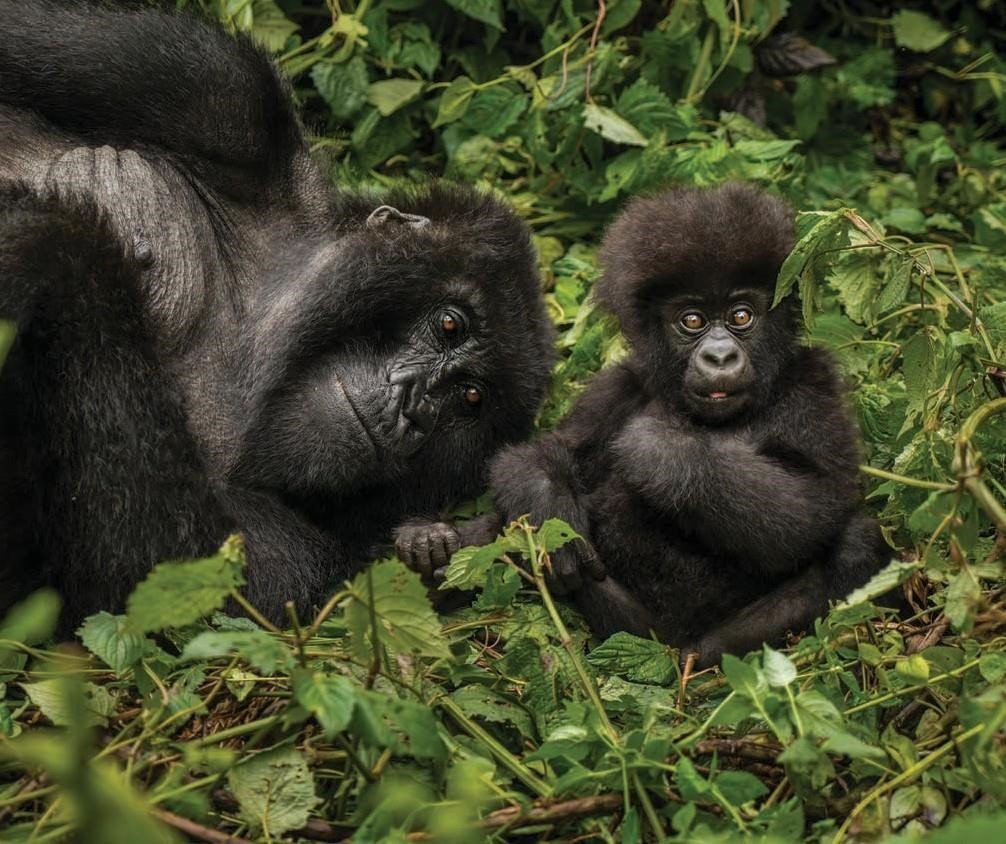
The gorilla families in Volcanoes National Park are some of the most famous in the world. This is where Dian Fossey conducted her pioneering research. Today, twelve habituated families are available for tourism. Each is named and has a distinct character. The Rwanda Development Board carefully manages visits. Only eight tourists visit each family per day. This exclusivity makes the experience intimate and personal.
The families range from large, powerful groups to smaller, gentler ones. The silverback leader defines the group. Some are calm and majestic. Others are bold and protective. Understanding the families adds richness to your trek. This guide introduces the main gorilla families you may encounter in Rwanda’s Volcanoes National Park.
The Susa Group
The Susa group is one of the most famous. Dian Fossey studied this family. It was once the largest habituated group. Today, it has split into Susa A and Susa B. Susa A is known for its twins. Gorilla twins are rare and celebrated. The group lives high on the volcano slopes. The trek to see them can be long and challenging. But the reward is immense. The views from their habitat are stunning.
In addition, the Susa groups are well-habituated. The silverbacks are impressive. The gorilla families in Volcanoes National Park owe much of their legacy to this pioneering group.
The Kwitonda and Hirwa Groups
Kwitonda means “humble one.” This group migrated from Uganda. The silverback is known for his calm, gentle nature. The family is large and peaceful. Hirwa means “lucky one.” This group formed from members of other families. It is famous for its twins born in recent years. The Hirwa group is often found in the foothills. The trek is usually shorter and less strenuous. It is a good choice for those with moderate fitness.
Moreover, the Kwitonda group offers a classic gorilla experience. The family dynamics are fascinating. The gorilla families in Volcanoes National Park each have their own story and personality.
Amahoro, Umubano, and Karisimbi Groups
Amahoro means “peace.” This group lives up to its name. The silverback is relaxed and tolerant. The family is large and harmonious. Umubano means “neighbourliness.” This group split from Amahoro years ago. The silverback, Charles, is powerful and protective. The Karisimbi group is named after the highest volcano. It lives at high altitude. The trek is demanding. The gorilla families in Volcanoes National Park offer a range of trekking difficulties to suit different fitness levels.
Furthermore, the guides know each family intimately. They will assign you based on your ability. You can request a shorter or longer trek at the briefing. The park matches each gorilla family in Volcanoes National Park to your personal preferences.
Sabyinyo, Agashya, and Titus Groups
The Sabyinyo group takes its name from the nearby volcano. The silverback impresses every trekker with his extraordinary size. The group is easily accessible. The trek is often moderate. Agashya means “the news.” This group was once small but has grown. The silverback is protective and vigilant. The famous Titus group takes its name from a legendary silverback who once led it with remarkable strength. He was one of the most studied gorillas in history. His legacy lives on in the group’s behaviour. The gorilla families in Volcanoes National Park carry decades of research and conservation history.
Therefore, whichever family you meet, the experience is extraordinary. The gorilla families in Volcanoes National Park are ambassadors for their species. Your hour with them will be unforgettable.