
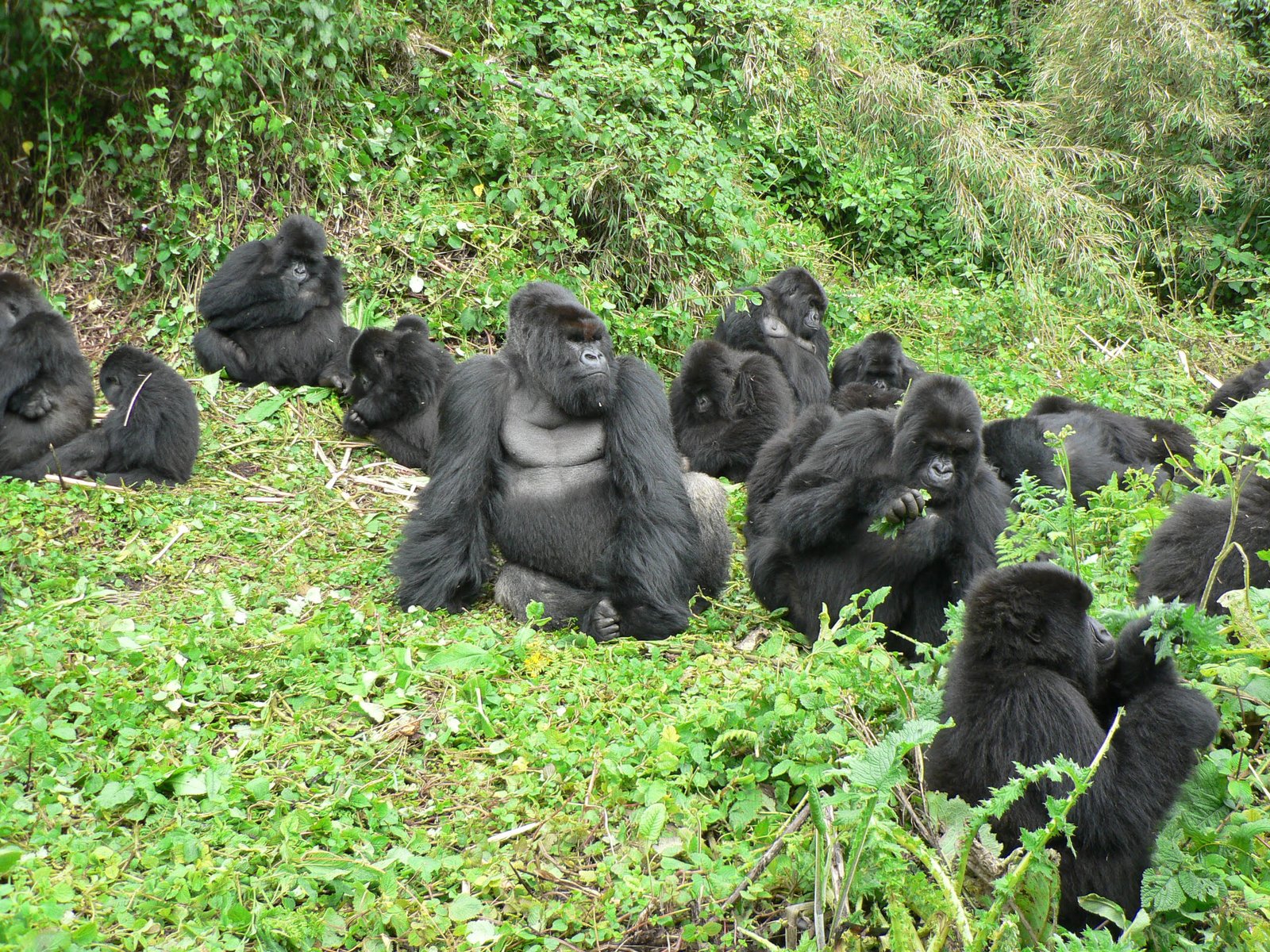
Volcanoes National Park is home to some of the most famous habituated mountain gorilla families in the world. These families are groups of mountain gorillas that have been carefully trained (habituated) to allow human presence for tourism and research.
Each gorilla family has its own silverback leader, social structure, territory, and behavior patterns. During gorilla trekking, visitors are assigned to one of these families depending on fitness level, trekking difficulty, and permit allocation.
At All Budget Safaris, we help travelers understand gorilla families so they can prepare for the most suitable trekking experience.
What is a Gorilla Family?
Social Structure of Mountain Gorillas
A gorilla family is a stable group of mountain gorillas led by a dominant male called a silverback. Each family typically includes:
- One dominant silverback
- Several adult females
- Juveniles and infants
- Sometimes additional subordinate males
The silverback is responsible for protecting, guiding, and making decisions for the group. He also mediates conflicts and ensures group safety.
These families live together in the forest and move daily in search of food such as bamboo shoots, leaves, and fruits.
Famous Gorilla Families in Volcanoes National Park
Overview of Habituated Groups
Volcanoes National Park is home to over a dozen habituated gorilla families available for trekking. Each group offers a unique experience depending on location and behavior.
Some of the most well-known families include:
1. Susa A Family
Susa A is one of the most famous gorilla families in Rwanda. It was extensively studied by primatologist Dian Fossey.
- Known for large group size
- Located in higher mountainous areas
- Can be physically demanding to track
- Famous for twin gorillas in the past
This group is ideal for experienced hikers seeking a challenging trek.
2. Sabyinyo Family
The Sabyinyo group is one of the most accessible families in the park.
- Easy to track
- Located in lower forest zones
- Suitable for beginners and older travelers
- Very stable group with calm behavior
It is often recommended for visitors who prefer shorter hikes.
3. Amahoro Family
Amahoro means “peace” in Kinyarwanda.
- Known for calm and peaceful behavior
- Led by a gentle silverback
- Requires moderate trekking effort
- Very popular among photographers
This group offers a relaxed and enjoyable trekking experience.
4. Umubano Family
Umubano means “living together.”
- Formed after splitting from Amahoro group
- Known for strong family bonds
- Moderate trekking difficulty
- Active and interactive group behavior
Visitors often enjoy observing their social interactions.
5. Agashya Family
Agashya is also known as “Group 13.”
- Led by a strong and dominant silverback named Agashya
- Known for frequent movement across territories
- Trekking can be moderately challenging
- Large group size
This family offers a dynamic and adventurous trekking experience.
6. Kwitonda Family
Kwitonda is one of the largest gorilla families in the park.
- Known for migration from Congo region
- Large group size with many members
- Moderate to challenging trek depending on location
- Highly active family
It is ideal for travelers who want to see many gorillas at once.
7. Hirwa Family
Hirwa means “the lucky one.”
- Known for rare cross-border movement history
- Smaller but very active group
- Moderate trekking difficulty
- Often seen near bamboo zones
This group is popular for unique sightings.
How Gorilla Families are Assigned
Allocation Process for Visitors
Visitors are assigned to gorilla families at the park headquarters before trekking begins. Assignment depends on:
- Physical fitness level
- Age and mobility
- Permit allocation
- Trekking difficulty of each group
- Visitor preferences (if available)
Rangers ensure that each visitor is matched with a suitable trekking experience.
Trekking Difficulty by Gorilla Family
Easy, Moderate, and Challenging Groups
Gorilla families are generally categorized by trekking difficulty:
Easy Trekking Groups
- Sabyinyo
- Amahoro
- Hirwa
Moderate Trekking Groups
- Umubano
- Agashya
- Kwitonda
Challenging Trekking Groups
- Susa A (long hikes, high altitude areas)
This system helps ensure visitors enjoy a safe and comfortable experience.
Behavior Differences Among Gorilla Families
Each gorilla family has a unique personality shaped by its silverback leader and environment.
You may observe:
- Calm and peaceful groups
- Highly active and playful juveniles
- Protective silverbacks
- Strong family bonding behavior
No two gorilla trekking experiences are ever the same, even within the same park.
Why Gorilla Families Matter in Conservation
Gorilla families are central to conservation efforts in Rwanda. Tourism revenue from trekking permits supports:
- Anti-poaching patrols
- Veterinary care for gorillas
- Habitat protection
- Community development projects
Responsible tourism ensures that these families continue to grow and thrive in the wild.
Photography Opportunities with Gorilla Families
Different families offer different photography opportunities:
- Large groups provide dynamic social scenes
- Calm families allow steady close-up shots
- Active juveniles create playful action photos
- Bamboo zone families offer clear backgrounds
Always remember that flash photography is strictly prohibited.
Final Thoughts on Gorilla Families in Volcanoes National Park
The gorilla families in Volcanoes National Park are the heart of Rwanda’s gorilla trekking experience. Each group offers a unique story, behavior pattern, and trekking challenge, making every visit different and special.
Whether you meet a calm family like Amahoro or a large and active group like Kwitonda, the experience of observing mountain gorillas in their natural habitat is unforgettable.
At All Budget Safaris, we help travelers choose the best gorilla trekking experiences and organize complete Rwanda safari packages, ensuring a safe, well-planned, and memorable adventure.