
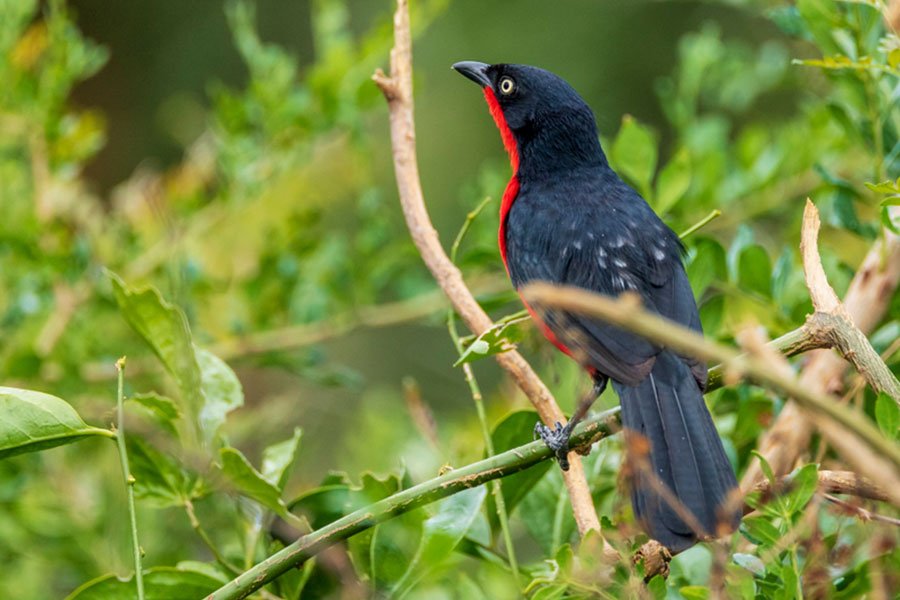
The rare birds to see in Bwindi Forest draw birdwatchers from every continent. This ancient rainforest shelters twenty-three Albertine Rift endemics. These species exist nowhere else on Earth. Bwindi’s isolation and age created a unique avian community. The forest is a global treasure for bird conservation. Your gorilla trekking permit also grants access to this birding paradise. This guide highlights the most sought-after species. Your life list will grow with each sighting.
Bwindi’s dense vegetation challenges birders. The birds often remain hidden in the canopy. A skilled local guide makes all the difference. They know the calls, the favored trees, and the best trails. Patience rewards you with glimpses of some of Africa’s rarest birds.
The African Green Broadbill
The African green broadbill tops every birder’s Bwindi list. This small, vivid green bird lives only in a few Albertine Rift forests. Bwindi offers one of the best chances to see it. The broadbill inhabits the mid-canopy. It feeds on fruits and insects. The Mubwindi Swamp trail in the Ruhija sector is the prime location. Listen for its distinctive call. A sharp, metallic note betrays its presence. The bird often joins mixed-species feeding flocks. Your guide scans these flocks carefully. Spotting a green broadbill is a moment of triumph for any birdwatcher.
The best time to search is early morning. The forest is cooler and birds are active. Rain can make sightings harder. However, Bwindi’s birds do not disappear in the wet season. Persistence pays off. The rare birds to see in Bwindi Forest include this jewel. Photographers dream of capturing its emerald plumage.
Shelley’s Crimsonwing
Shelley’s crimsonwing is another Albertine Rift endemic. This stunning finch has bright crimson plumage and dark wings. It forages on the forest floor, often in dense undergrowth. The bird is shy and elusive. It moves quietly among fallen leaves. Spotting one requires patience and a good guide. The Mubwindi Swamp area again offers the best chances. Early morning walks along quiet trails increase your odds. The crimsonwing often feeds in pairs. A flash of red among the green undergrowth signals its presence. The rare birds to see in Bwindi Forest include this secretive beauty.
Other Albertine Rift Endemics
Bwindi hosts many other rare species. The handsome francolin is a ground-dwelling partridge. It scurries through the underbrush. The Rwenzori turaco is larger and more visible. Its purple and green plumage shines in the light. The dwarf honeyguide, the stripe-breasted tit, and the blue-headed sunbird also live here. Each has a specific niche in the forest. Your guide helps you find them. The rare birds to see in Bwindi Forest fill a dedicated birder’s notebook.
The forest also shelters the African emerald cuckoo and the black-billed turaco. These are not Albertine endemics. However, they are spectacular birds. The variety is astonishing. Even without targeting rarities, you see incredible species.
Practical Birding Tips for Bwindi
Hire a specialised birding guide. Many general trekking guides also know birds. However, a dedicated birder guide offers deeper expertise. Bring binoculars with good low-light performance. The forest is dark. A spotting scope is less useful in dense vegetation. Wear muted, waterproof clothing. Move slowly and quietly. Stop frequently to listen. The forest reveals itself to those who are still. The rare birds to see in Bwindi Forest reward patience and respect.
Therefore, extend your gorilla safari by a day or two. Explore the forest with your binoculars. Bwindi’s rare birds will leave you awestruck.